Blog
Insights on AI-powered course creation, instructional design, and product updates.
How much does one credit cost? Why we price AI work in euros
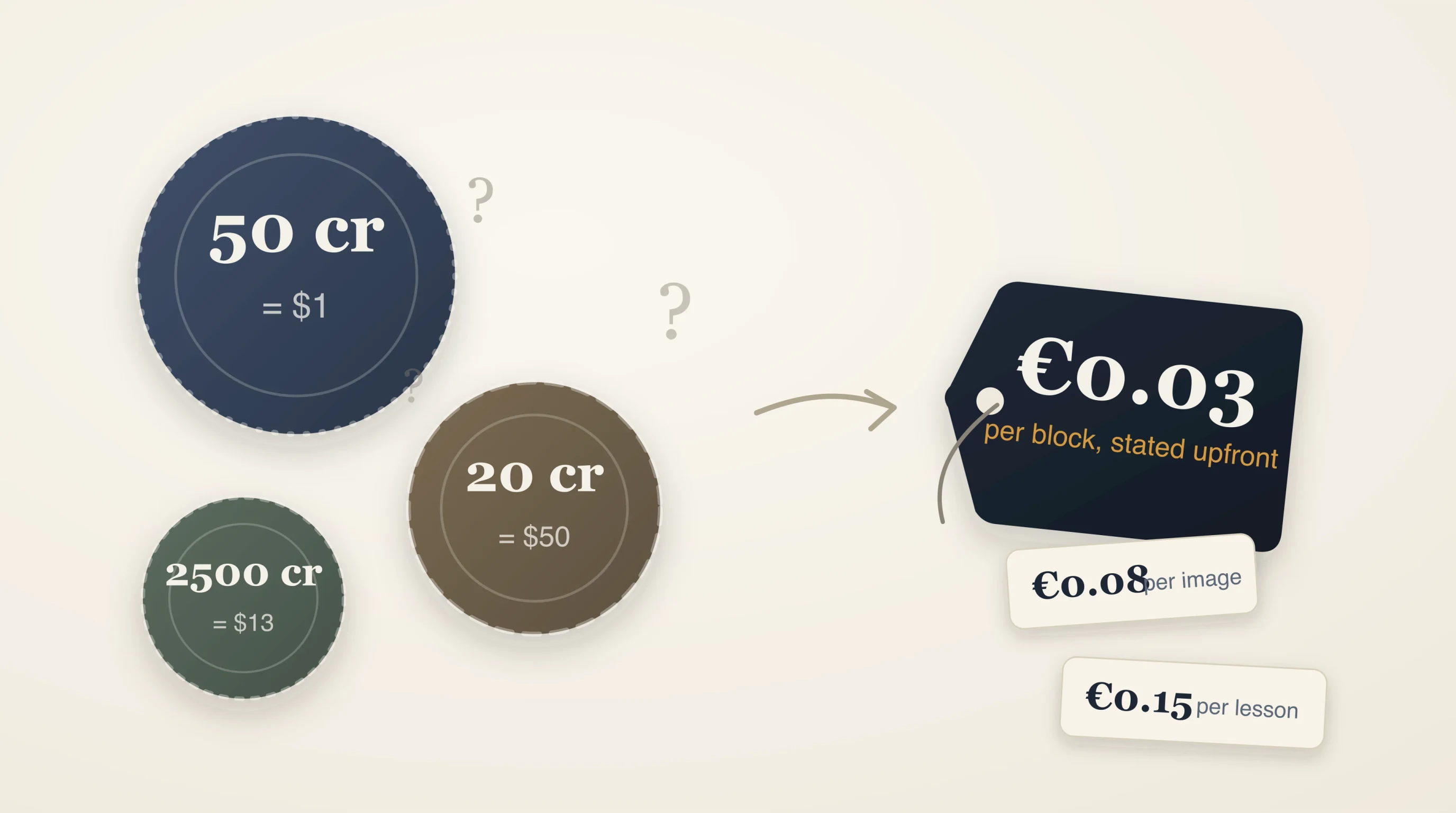
Three AI e-learning tools, three answers: $1 buys 50 credits, $50 buys 20, $13 buys 2,500. Credits are an abstraction layer that hands pricing uncertainty to the customer — here's why we tore ours out and put real euro prices on every AI action instead.

An AI tutor that won't just hand over the answer: conversation styles in LearnBuilder
The AI Tutor block can now teach in five different ways — answer, quiz, Socratic coaching, practice scenario, or fully custom. Here's why 'just answering' is often the wrong default, what each style does, how it stays grounded in your material, and what teachers can see.

Turn your consulting methodology into a course clients actually complete
A consultant asked us for a brand-strategy course. The interesting part wasn't the content — it was that the client needed to leave with a finished strategy, not just knowledge. That's what the new Workbook block is for.

Subject-matter experts know the content. The course is the hard part.
What years of training subject-matter experts to build e-learning has shown me: the patterns that consistently trip them up, why traditional authoring tools make it worse, and what specifically helps when the goal is making deep domain expertise reach learners without a three-month tooling detour.

Agentic learning, and the courses it will not replace
An honest look at agentic learning — AI agents that design and deliver the whole learning experience on the fly. What is genuinely possible today, what early research like Bastani et al.'s 'Generative AI Can Harm Learning' actually shows, and which parts of structured course design no agent has yet replaced.

Building a course by hand, on purpose
After months of generating courses with AI, I built one by hand again — and noticed everything the fast workflow quietly removes: the loop of trying and deleting, the specific jokes, the human touch. Why LearnBuilder lets you set how much AI you want, per course.

What shipped in LearnBuilder this week: a calmer editor, smarter AI course creation, and 60 languages
Block backgrounds and full-width layouts, full-screen interactive slides, an editable SVG element, four instructional-design approaches for AI course creation, audience-aware tailoring, 60 course languages with translation, AI-translated video subtitles, and start/end frame control for video generation.

Will Claude Design replace e-learning authoring tools?
Claude Design launched into Anthropic Labs in April with direct editing, design systems, and organization-scoped collaboration baked in. So what is left for e-learning authoring tools to do? An honest look at where Claude Design lands inside L&D — and where the gaps still are.

Building an AI coding block into LearnBuilder: what works, what breaks, what's still open
I built an AI coding block into LearnBuilder after seeing Claude Design demos used for e-learning. Here's what's working, what still breaks, and the hard problems I haven't solved yet: persistence, reporting, and the token cost of nudging.

AI-assisted, hand-built, or both: how to choose inside LearnBuilder
LearnBuilder supports AI course generation, full manual authoring, and hybrid workflows where AI drafts and humans refine. Here's how to choose the right approach for your content, your constraints, and your comfort level with uploading documents to AI.

Compliance training doesn't have to be boring — but it often should be quick
The compliance training debate tends to collapse into two camps: people who think it should all be click-through checkboxes, and people who think every module deserves scenario-based design. Both are wrong in interesting ways.

LearnBuilder vs. vibe-coding your own learning content
AI has made it genuinely possible to build interactive learning experiences by describing what you want in plain language. So why use a purpose-built authoring tool at all? The answer is more nuanced than it might seem.

LearnBuilder for instructional designers
Most of what gets written about AI authoring tools is aimed at people who have never built a course before. This post is for the people who have — and who want to know whether LearnBuilder has enough depth to be worth their time.

Top 10 eLearning Authoring Tools for 2026
A practical comparison of the best e-learning authoring tools in 2026 — from AI-powered course creators to traditional SCORM editors. What's changed, what matters, and which tool fits your workflow.
Microlearning authoring with AI: bite-sized lessons that stick
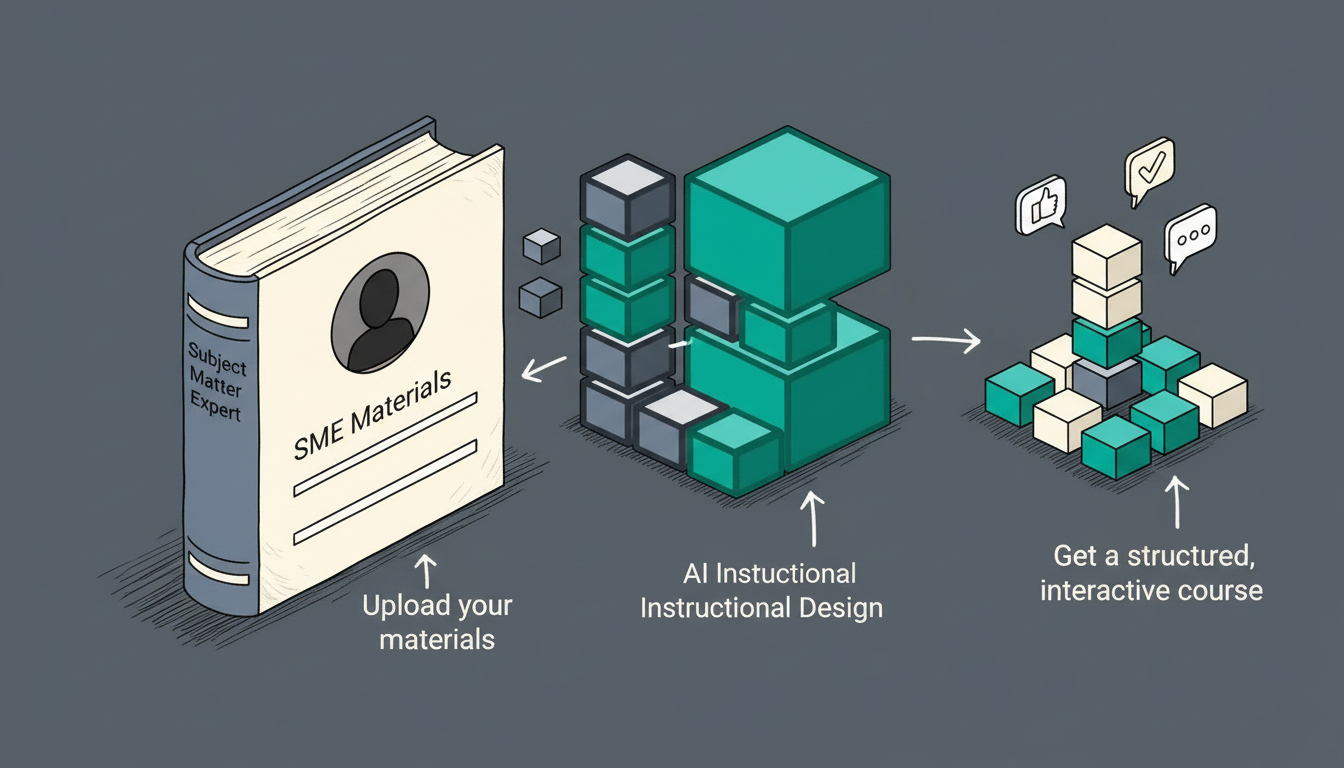
Long courses get skipped. Microlearning gets done. Here's how AI makes it practical to create short, focused lessons that actually change behaviour — without a team of instructional designers.

Your LMS doesn't come with courses — and that's the gap nobody warns you about
Most organisations buy an LMS expecting a training solution. What they get is infrastructure. The courses still need to come from somewhere — and that's where the real work begins.
How to turn a document into staff training — without an L&D team
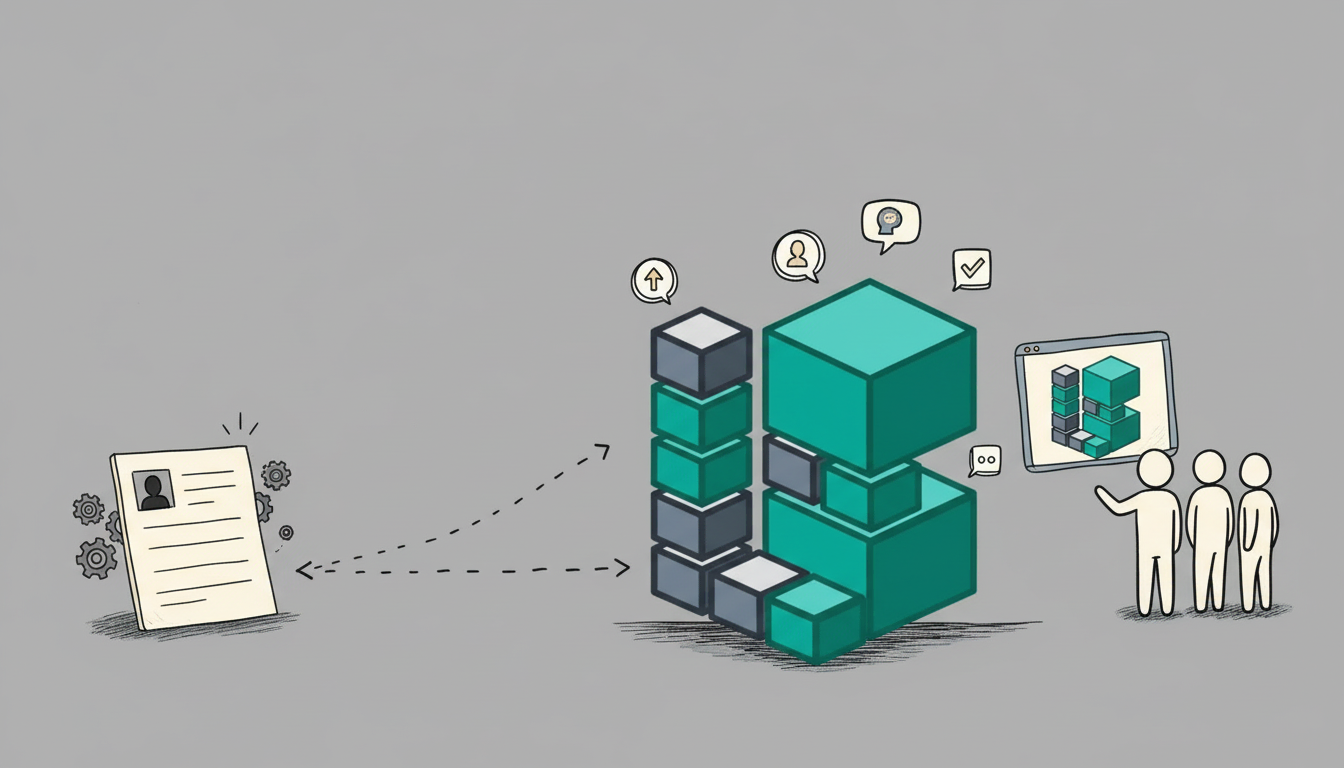
Turn a policy document or handbook into real staff training — no L&D background, authoring-tool licence, or contractor budget needed. A practical walkthrough.

The case against active learning
The forty-year counter-tradition in learning research — Clark's media debate, the 'no significant difference' finding, and what they mean for e-learning.

Learning through decisions
There is a well-documented gap in learning research between declarative knowledge - knowing *that* something is true - and procedural or applied knowledge - knowing *how* and *when* to use it. The gap shows up most clearly when learners who can answer factual questions correctly still fail to apply the underlying principles in unfamiliar situations.

Why most e-learning doesn't work
There is a moment most instructional designers recognise. You finish a course. It looks good. The client approves it. Learners click through, hit the knowledge check at the end, score 80%, and receive their completion certificate. Six weeks later, you wonder whether any of it stuck.

Welcome to the LearnBuilder Blog
Introducing the LearnBuilder blog - where we share insights on AI-powered course creation, instructional design tips, and product updates.